


eBike vs Car: Can an Electric Bike Replace a Car?
September 27, 2022
Are you looking to make a change in your routine, or simply just tired of being stuck in traffic all day? Maybe you want to stop driving altogether or, at the very least, decrease the amount of time spent in your vehicle. But in reality, can an ebike replace a car fully? Making the decision between an e-bike vs car may seem like a big decision to make, but we are here to let you know why it isn’t.
So, which is better? We’re here to help you decide.
If you’re considering ditching your car for an electric bike, but are still on the fence about the decision, keep reading below to learn more about all of the advantages and disadvantages of each mode of transportation and which one is better for you.
Advantages of an Electric Bike Vs Car
There are lots of reasons to consider choosing an ebike instead of a car for your daily commute, ranging from improving your physical health or having a positive impact on the environment. Let’s take a look at a few of the great things about owning an electric bike in more detail.
They're Fun to Use
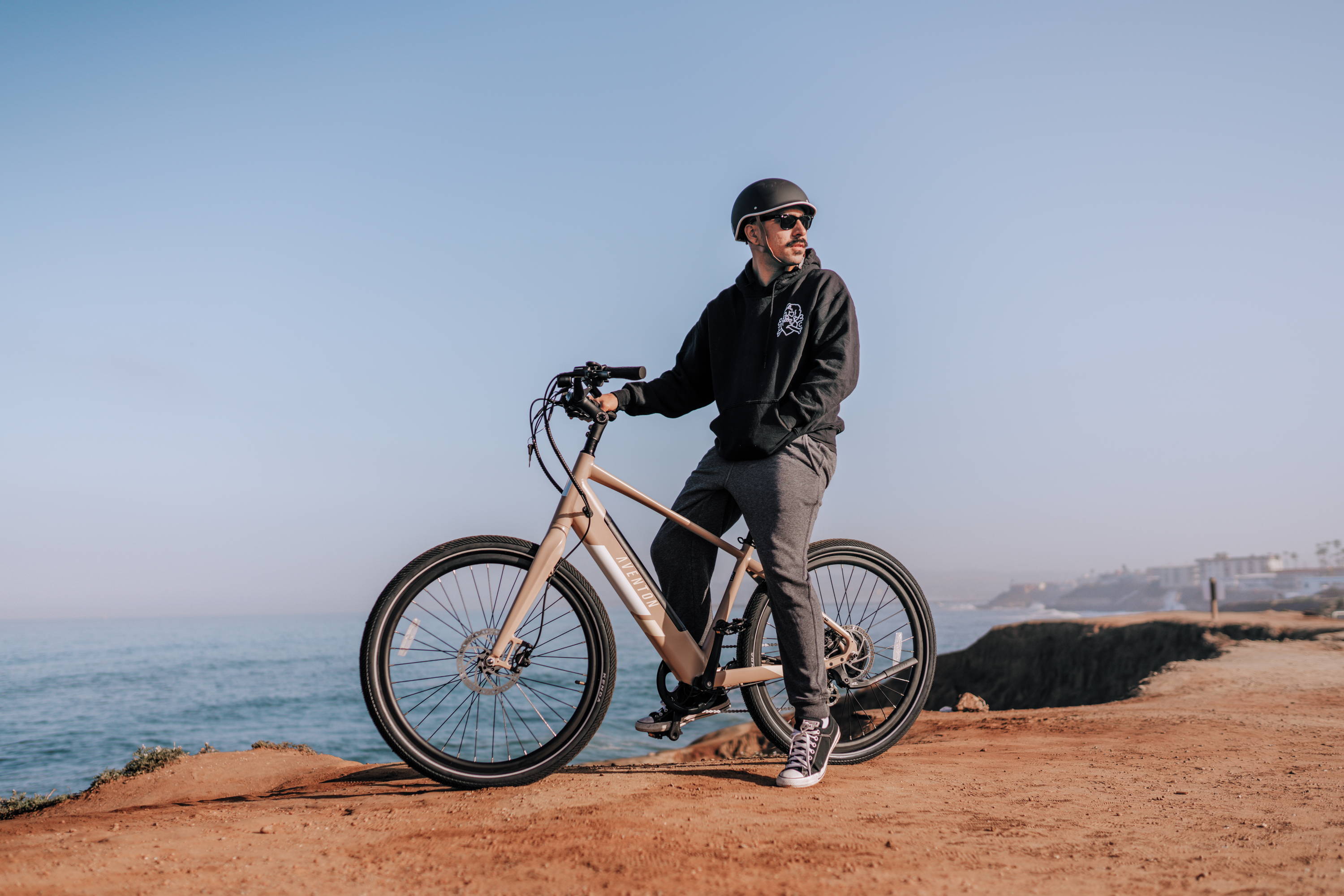
Ebikes allow each rider to feel more in touch with their surroundings. Whether it be their local neighborhood, city, or mountain view, an electric bike gives you incomparable freedom. Additionally, ebikes allow you to enjoy all of nature’s finest gifts, which is something that you don’t often get to do when spending an excessive amount of time in your car. Ultimately, ebikes just make life a little bit more fun.
Looking for something fun to use? Check out our best-selling step-through electric bike!
Saves You Money
In the long-term, ebikes are massive cost savers compared to cars. While they may be an expensive initial purchase, when you add in the expenses of registration fees, insurance fees, tires, maintenance and repair, and depreciation, you will find that an electric bike is much more friendly to your budget. While ebikes may not be able to fully replace car trips for long travel over a certain amount of miles, it's safe to say that they may decrease not only the amount of time spent in your car, but will also reduce the amount of money you put into them every year. When comparing the cost of maintenance on an ebike vs car, ebikes rack up a lot of extra savings.
Keeps you Healthy
When you ride your ebike, it’s much like riding a regular bike, which means you get the same physical advantages. Most electric bikes are powered by pedal assist, which means you will still be getting a good workout. Moreover, if you have somewhere to be and don’t want to smell sweaty from an intense workout, you can increase the pedal assistance to prevent yourself from smelling foul, while still making a healthy choice for your body.
Dodge Traffic
One of the best things about using an ebike is the fact that you can now worry much less about heavy traffic. Not only does an ebike allow you to maneuver through traffic more quickly - and you have your own bike lane - but it also provides you with more alternate paths to your destination. In some cases, you’ll find that you can shorten the distance from where you are and where you need to be as you are no longer confined to taking only roads and highways.
Environmentally-Friendly
Above all, using an ebike is an environmentally-friendly decision to make. We all love cars - even electric cars - but the number of pollutants generated by them is quite massive. Not only does using an electric bicycle cut down on your costs, but it also cuts down your carbon footprint, making you more environmentally responsible.
Read more: 9 Important Benefits of Riding an Ebike
Disadvantages of an Electric Bike vs Car
While there are many great things about using an ebike, they also come with a few unique challenges.
They Can be Expensive
Even after you do the math on an electric bike vs car, ebikes are still more expensive than what you would pay for a traditional bicycle. Additionally, you will also want to consider things like insurance, accessories, and the necessary equipment that you will need to ride your ebike. While this is still much lower than the cost of a car, it’s something to consider before purchasing a bike.
They're Heavy
While most bicycles are rather lightweight and easy to transport, ebikes are a different story. With most ebikes weighing nearly 40 pounds, not including equipment, an ebike isn’t a bicycle that you can simply sling over your shoulder. If you’re someone who likes to have a bicycle that is easy to carry and stow away, we recommend our very own Sinch Foldable Electric Bike!
You Will Need a Place to Charge the Bike
With an electric road bike, you will also want to be sure you have a location nearby that you can charge it. Whether this is your garage or an outdoor electrical socket, you will want a secure place where you can quickly charge your ebike when necessary. While this may not be a problem for homeowners, if you are a renter living in the city, you will also want to add this to your consideration when purchasing.
Ebike Laws Differ Between States
As ebikes increase in popularity across the country, states are creating laws to regulate the use of ebikes. From classification to licensing, helmet requirements, and which types of ebikes are allowed in particular places, you can expect this landscape to change a bit over the coming years.
Advantages of a Car vs an Electric Bike
Now, let's dive into the advantages of owning a car.
Don't Need to Worry About Range
Unlike an electric bike, with a car, there isn't any possibility of running out of power since all you need to drive a full gas tank. This means you won't need to wait for a battery to recharge, and you also won’t need to worry about how far you’ll be able to drive.
More Comfortable
In the ebike vs car debate, there’s no denying that driving a car is more comfortable than riding a bicycle. Not only does driving a vehicle require less energy, but it’s also a much smoother ride compared to that of a standard bike.
Higher Speed Limit
Unlike electric bikes, which usually have a speed limit restriction, cars are generally permitted to drive at much higher speeds. If you need to get to a destination quicker, a vehicle will always be the best alternative, provided that the road is not congested.
Disadvantages of a Car vs an Electric Bike
As with everything, a car also has some disadvantages, as well.
Expensive to Maintain
Regardless of if you own a used or a new car, there is still a hefty price tag that comes with maintaining a vehicle. From the initial upfront cost to inevitable repairs and maintenance costs, as well as fuel cost, owning a car is much more expensive than you might think.
Less Exercise
While driving a car may be much more comfortable, you simply aren’t getting any exercise while doing so. The amount of calories you burn while riding your ebike is incomparable to that of driving a car.
Cost Breakdown
As mentioned above, the cost of owning and running an ebike is significantly lower than that of a car. Let’s take a quick look at the breakdown of the expenses of an ebike vs car.
Insurance:
Car: $1,600 per year
Maintenance and Repairs:
Car: Roughly $1,000 per year
Ebike: Roughly $200 per year
Parking Fees:
Car: Roughly $125 per year
Ebike: $0
Fuel:
Car: Roughly $1,200 per year
Ebike: Roughly $60 per year
Choose Your Next eBike with Aventon
As you can see, both options have their advantages, as well as disadvantages. At the end of the day, choosing between an ebike or car is a very personal decision and something only you can decide.
If you’re ready to purchase an ebike, contact Aventon today. Our goal is to provide each customer with the chance to change their lives through the freedom of mobility, and bikes are an excellent way to achieve that. Contact us today to learn more about how we can help find the right ebike for you.


 Aventon US
 Aventon CA
 Aventon DE

It was a great article. thanks for covering such a great piece of information. It’s e-bike era, eco-friendly.
It was a great article. thanks for covering such a great piece of information. It’s e-bike era, eco friendly.